Chitwan National Park
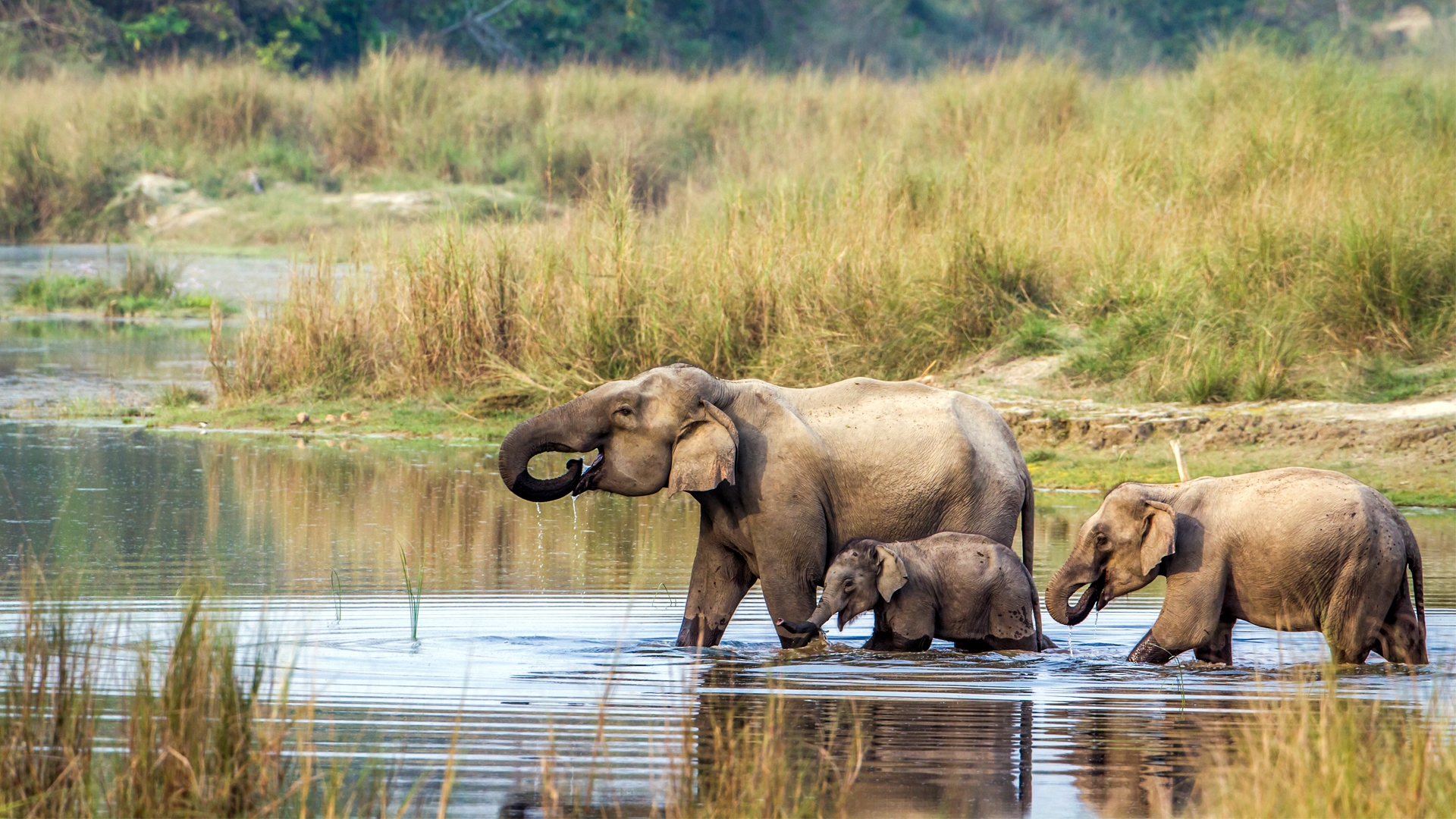
Chitwan National Park was declared UNESCO Natural Heritage Site in 1984. The park that includes in its area a part of the Shivalik Hills, is covered with deciduous forests overlooking the flood plains of Narayani, Rapti and Reu rivers and offering a wilderness of rich ecosystem that includes mammals, birds, reptiles and water animals of several kinds. There are around 600 plant species, 56 mammals, 539 birds and 49 amphibians and reptiles found in the park. The highlight are the 412 Asian one-horned rhinoceros and some 59 Royal Bengal tigers that live in the dense forests of the park. Sharing home with these are other animals like rhesus monkey, langur, deer, leopards, gaur, wild boar, wild dogs and wild cats. Among reptiles are different kinds of snakes including the python, while the river areas breed reptiles like the endangered long snouted gharial popularly known as Gangetic crocodile and marsh crocodiles. The forest is alive during summer with the arrival of migrant birds like paradise flycatcher, Indian pitta and parakeets, while winter birds include waterfowl, Brahminy ducks, pintails, bar-headed geese, cormorants and migratory birds from Siberia. Other bird varieties are woodpeckers, hornbills, peacocks, peahens, floricans and redheaded trogons. A rare attraction of the park is the world's fresh-water dolphin sometimes seen in River Narayani. Another factor adding a distinct touch to the Chitwan experience is the colorful Tharu culture. There are also sites of religious and historical importance at Devghat, Pandavnagar, Balmiki Ashram and Kabilaspur.

Activities

Jungle safari on elephant back
jungle walk
canoe ride
jeep drive
experience of Tharu culture

Accommodation
lodges
Resort Hotels

Best Season
Oct-Mar average temperature 25 degrees Celsius); Apr-Jun (hot, up to 43 degrees), Jul-Sep (rainy)

Headquater
Kasara

Route
The park headquarters at Kasara is a 21-km drive from Bharatpur which is 20 minutes by air or 146 km by road from Kathmandu