Sagarmatha National Park
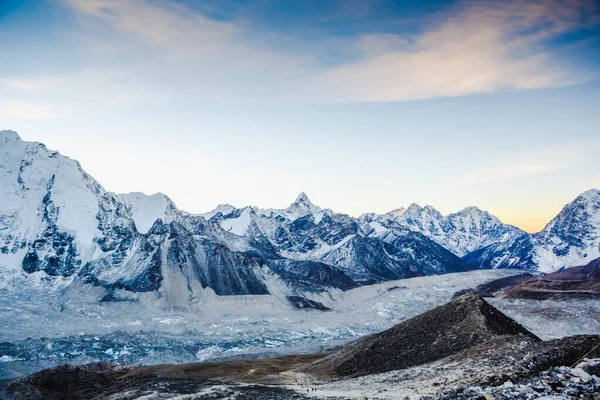
The prime attraction in the Sagarmatha National Park is Mt. Everest, the highest peak of the word. The park was added to the list of World Heritage Site in 1979. The park, a part of the Himalayan ecological zone, has several other prominent peaks most of which are above 6,000 m. With most. of the park above 3,000 m, Sagarmatha is full of rugged terrain with deep gorges, glaciers and huge rocks. With its Himalayan terrain and its unique culture, the park offers a blend of natural and cultural tourist products here. The vegetation at lower elevation is dominated by pine and hemlock forests, while above 3,500 m the forest is dominated with silver fir, birch, rhododendron, and juniper trees. During spring and monsoon the varieties of rhododendron flowers are seen. The common wildlife in the park are Himalayan tahr, ghoral, musk deer, pikka (mouse hare) weasel, jackal. Other rarely seen animals are Himalayan black bear, wolf, lynx, and snow leopard. Birds inhabiting the park are of over 193 species. Common ones among them are the impeyan pheasant (Danphe), blood pheasant, red- billed chough, yellow-billed chough, snow cock, snow pigeon, Himalayan griffon, and lanimergeyer. The national park also showcases the cultural trophies with the warm Sherpa hospitality and its many monasteries and cultural landmarks.

Activities

Trekking
mountaineering
experience of Sherpa culture

Accommodation
Camping
lodges
Luxury Hotels

Best Season
Oct-Nov and Mar-May; Dec-Feb (snow, daytime temperature 5 degrees Celsius), Jun-Sep (rainy)

Headquater
Mendalphu, Namche Bazaar, Tel: 038-626043

Route
Fly to Lukla which is 30 minutes by air from Kathmandu